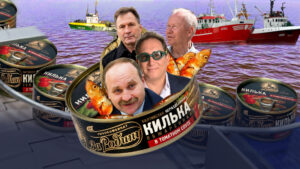


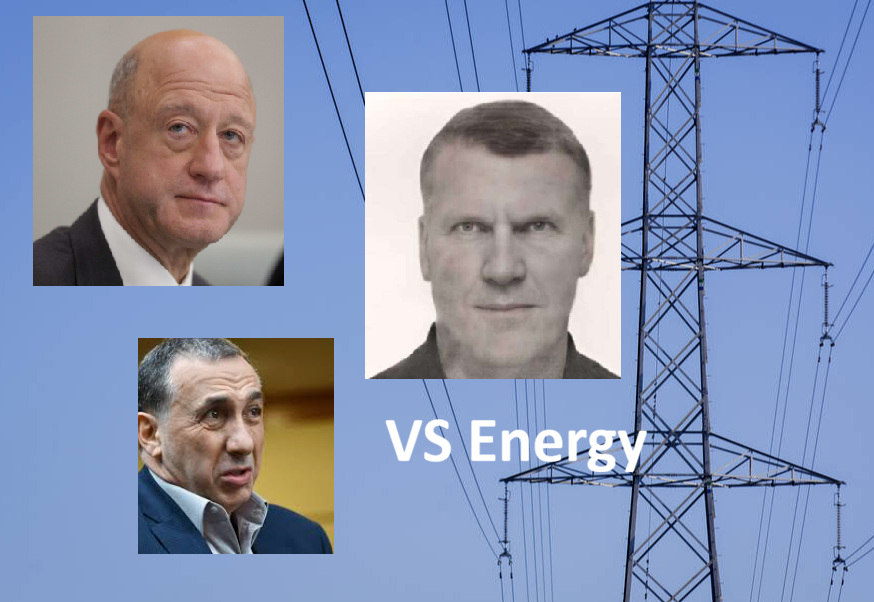
Since 2000s, Russian business group «luzhnikovskie», tightly connected with Russian criminal gangs and Federal Security Service (FSB), has gradually turned into malignant tumor embracing various economic spheres and threatening Ukrainian national security. High level Ukrainian corruption boosted its survival even after Russian invasion into Ukraine in 2014 and 2022. The group still controls Ukrainian objects of critical infrastructure – electricity distribution companies. It uses the scheme of fake de jure owners from EU countries and Ukraine. FSB stands behind each of them.
The Center of Journalist Investigations initiates a series of materials highlighting the consideration by the High Anti-Corruption Court of Ukraine of the lawsuit of the Ministry of Justice of Ukraine about nationalization of assets of sanctioned beneficiaries of company «VS Energy» founded by «luzhnikovskie». For the start, we will remind key aspects of this 25 years old story and its key figures.
Six oblast electricity distribution companies, objects of critical infrastructure of Ukraine, have been still owned by Group of companies VS Energy. Though the National Security and Defense Council of Ukraine sanctioned them almost three years ago. Ukrainian law enforcement bodies, prosecutors, the Cabinet of Ministries and – earlier – numerous journalist investigations in various countries have repeatedly named three well known Russians as their final beneficiaries:
Alexander Babakov, the Vice Speaker of State Duma of the Russian Federation, one of leaders and donors of Russian parliamentary faction «Fair Russia – For Truth», sanctioned by EU, USA, Great Britain, Canada, Japan, Ukraine, Australia, New Zealand;
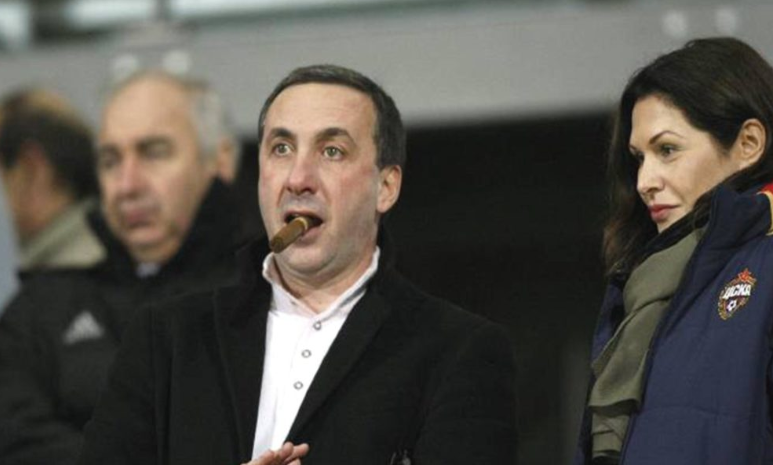
Evgeny Giner, the president and co-owner of Russian football club TSKA, partner of sanction Russian state corporation «Rostekh», with business interests in occupied Sebastopol;
Mikhail Voevodin, businessman with passports of Russia, Israel and Slovenia. «Green card» of Interpol and Millenium database called him as the «thief-in-law» with nickname «Misha Luzhnetskiy» and the leader of organized criminal group focusing on money laundering and extortion.
In 2014, six citizens of countries of European Union de jure acquired companies within the Group of VS Energy. Since then, representatives of VS Energy have insisted that these people have been honest European buyers of Ukrainian assets and not fake owners, connected with real Russian owners by many years of cooperation and work and marital relationships. Investigative journalists from various countries disclosed the evidence of these connections long time ago. The Ministry of Justice of Ukraine lists them in its lawsuit. Let us remind some of them.
Шість обленерго – об’єктів критичної інфраструктури України – і на третій рік дії застосованих до них санкцій РНБОУ і досі належать Групі компаній VS Energy. Її кінцевими бенефіціарами слідчі органи, прокуратура, уряд України, а ще раніше – численні журналістські розслідування в різних країнах називають трьох відомих росіян:
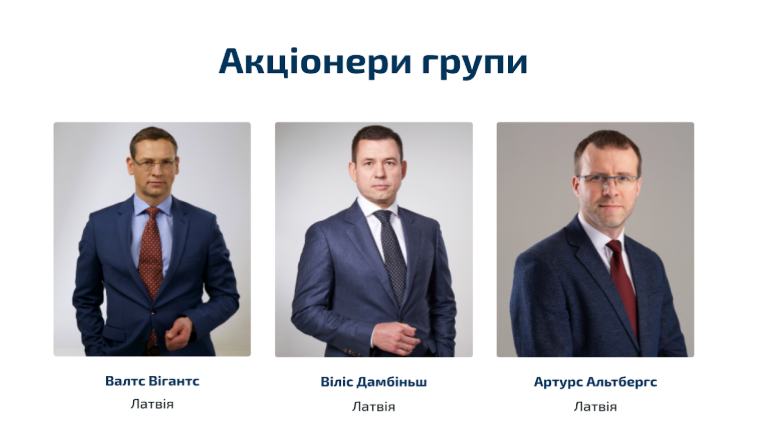
Website of VS Energy demonstrates photos of only three from six de jure beneficiaries. Screenshot of the page from website vs-energy.eu/en
Citizens of Latvia Vilis Dambins [Віліс Дамбінс] and Valts Vigants [Валтс Вігантс] have been long time managers and fake owners in business entities of Babakov, Giner and Voevodin in different jurisdictions. Their role has been disclosed in famous international investigation Panama papers ten years ago. International team of journalists analyzed leaked database of Panama lawyers’ company Mossack Fonseca which set up thousands of legal entities in offshore zones for millionaires around the world. The analysis demonstrated that company «AED International LTD», founded by Alexander Babakov and then transferred into the ownership of his daughter Olga Babakova, and company «NYX Management LTD», co-owned by Mikhail Voevodin and Evgeny Giner (beneficiary), have been managed by company «V.D.Nominees», represented by Vilis Dambins and Valts Vigants. Look at the name of their company – it is called by what they are in fact – nominees, fake owners. Russian oligarchs have their own sense of humor.
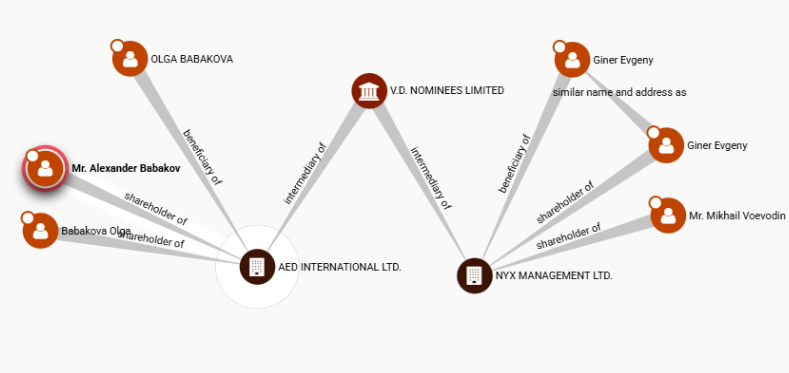
Scheme of management of company «V.D.Nominees» by companies of Babakov, Giner and Voevodin. Screenshot of graphics on the website of investigation Panama papers
Citizen of France of Russia Natalia Selivanova has been another de jure owner of VS Energy. She has been civic wife and business partner of Voevodin (the lawsuit of the Ministry of Justice of Ukraine also mentions it). Selivanova and Voevodin have owned 50% of shares of Kryvy Rih Iron Ore Plant through three offshore companies and fake owner-Cypriote. Ukrainian oligarch Igor Kolomoisky sold them his shares. Another half has been owned by Ukrainian business mogul Rinat Akhmetov.
Selivanova has been also owner of 39,57% of shares of Ukrainian JSC «Dniprospetsstal», the manufacturer of high quality steel and alloys for the Ukrainian military industry. Besides that, 6,8% of shares of this strategic enterprise have been owned by the company, connected with Viktor Medvedchuk and his wife Oksana Marchenko. It is Cypriote company Gazaro LTD, according to Ukrainian analytical system YouControl.
Let us remind that Viktor Medvedchuk has been pro-Russian Ukrainian politician and oligarch, sanctioned by Ukraine and a number of EU countries. Vladimir Putin has been god father of his child. He has been arrested and then expelled from Ukraine to Russia after the Russian full scale invasion.
The fifth de jure owner of VS Energy has been German citizen Marina Yaroslavskaya, the wife of Giner. She left the Russian citizenship and moved to Germany. In an interview in 2013, Evgeny Giner told that his daughter and his grand-children also had German citizenship. He received German residence permit, in order to avoid problems with German visa.
(By the way, look at the modest charm of Russian oligarchs abroad: yellow building in Berlin has been indicated by Marina Yaroslavskaya as her residence).
Family of Evgeny Giner and Marina Yaroslavskaya. Photo: social networks
The sixth de jure beneficiary of VS Energy is German citizen Oleg Sizerman. He has been business partner of Giner and Voevodin for 15 years. They have been managing directors of company VOGIS Grundstücks und Handels GmbH. The first word is an obvious abbreviation: VO – Voevodin, GI – Giner and S – Sizerman. This company has been already liquidated. In 2021, it has been removed from the business register.
The use of fake owners is eternal in business world. It can be relatively easy disclosed by journalist investigations. It is hard to prove it in the court. But is it the only reason that Ukrainian authorities have been unable to remove from Russian hands assets of Ukrainian energy companies, metallurgical plants, hotels with restaurants and casinos, trade centers, corporate rights etc? Certainly, it is not.
Today the State Security Service of Ukraine, the State Bureau of Investigations, the Office of General Prosecutor of Ukraine urgently re-open or initiate criminal investigations into the activity of the Group of VS Energy. But it must be recognized that the Ukrainian state has served as laundry machine for Russian and other «dirty money» for more than 20 years. The Ukrainian authorities opened criminal investigations and dropped them during this period. All Ukrainian presidents from Kuchma to Zelensky (up to 2022), heads of the Cabinet of Ministries, General Prosecutors, senior officials of law enforcement bodies, the National Bank of Ukraine, State Property Fund and Antimonopoly Committee of Ukraine etc failed to stop the expansion of this Russian business group, with tight connections with Russian government, intelligence services and criminal gangs.
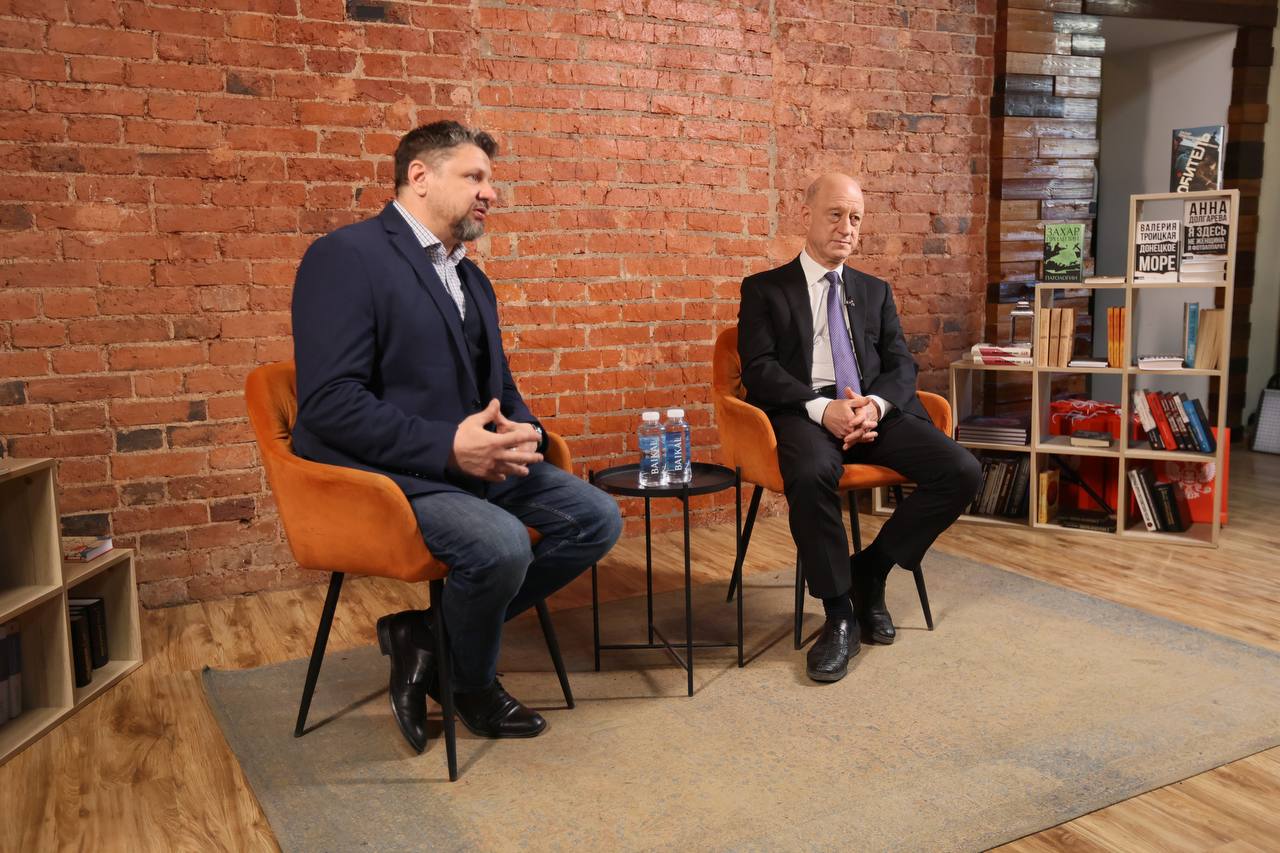
Vice Speaker of State Duma of the Russian Federation Alexander Babakov (right) and propagandist Oleg Moryanin in «Bunker at Lubyanka» at the meeting with foreign journalists after their trip to temporary occupied territories of Ukraine. Babakov finances project of «press trips» of foreign blogers, politicians and journalists to Ukrainian occupied territories, including interviews with Ukrainians POWs. 2025. Photo: mm-g.ru
As of today, the Ukrainian authorities succeeded in nationalizing only one asset of the Group of VS Energy – 90% of shares of «First Investment Bank» (PIN bank). Since 2016, they have been owned by Evgeny Giner.
It is shocking that the Ukrainian regulatory bodies allowed Russian citizen Giner, co-owner of the football club of the Russian Ministry of Defense (TSKA), with business interests in already occupied Sevastopol, to acquire Ukrainian PIN bank – after Russian occupation of Crimea and Russian invasion into Eastern Ukraine in 2014!
In January 2024, his shares were nationalized and the State Property Fund of Ukraine became their new owner. In December 2024, the National Bank of Ukraine recognized PIN bank as problematic and later, in February 2026, insolvent.
Do not ask how Russians succeeded in launching such a powerful business and financial group in Ukraine. They succeeded because Ukrainians did not stop them.
What happened before expansion of «luzhnikovskie» into Ukraine
It is not a coincidence that expansion of «luzhnikovskie» into Ukraine started at the beginning of 2001.
Representatives of this criminal gang initiated their «legalization» as public business entities and personalities in Russia in the second half of 1990s.
In 1993, the gang established its control over largest market in Moscow created on the basis of huge Soviet sports complex «Luzhniki». Russian investigators of «work biographies» of Babakov, Giner and Voevodin concluded that it was impossible without gangs and \ or informal support of post-Soviet Russian intelligence services. According to former partners of Babakov and Giner, the market brought them up to 20 million USD per month. The gang «luzhnikovskie» flourished on these revenues.
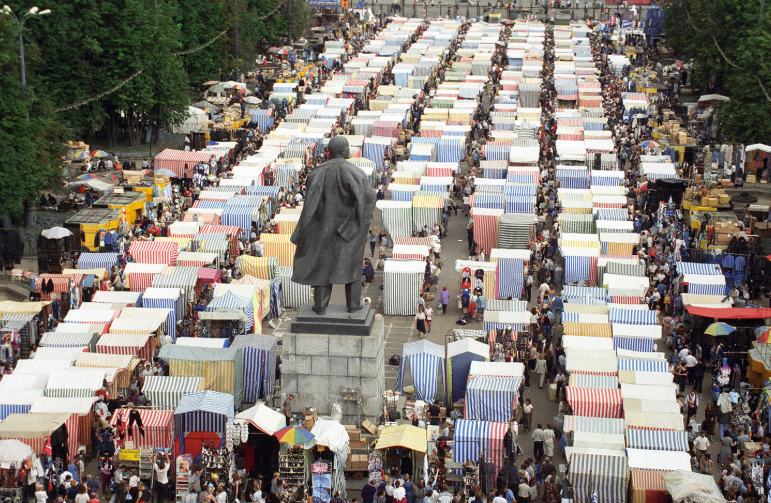
Flea market near sports complex «Luzhniki» in Moscow brought its reported owners Voevodin, Babakov, Giner and Kurochkin up to 20 million USD of revenues per month. Photo: B.Kavashkin / TASS / Vedomosti
In February 2001, Giner became the President of football club TSKA and its co-owner (through British Bluecastle Interprises Limited; since 2019, Giner has been direct owner of this company). Media reported that Giner spent from 30 to 80 million USD for the acquisition of club’s shares. However, Giner stated in an interview that partners transferred the club under his management as… a gift for his 40th anniversary (May 2000). Then, he clarified that he «had only one partner. He loves football but he does not believe that he is able to manage football or do something with it».
Who could make such a gift, given that TSKA is the club of Russian Ministry of Defense? Voevodin? Babakov? They did not have such a political weight.
Today Sergei Chemezov, Colonel-General of Soviet KGB and Russian Federal Security Service (FSB) and head of Russian state corporation «Rostekh», is the most valuable partner for energy and industrial business of Giner. Chemezov has been friend of Vladimir Putin since their service as KGB agents in Germany. Then, Chemezov and Putin became members of infamous cooperative «Ozero» [Lake]. Chemezov has managed association «Sovintersport» until middle of 1990s. Later he headed the Department of External Economic Connections within the Administration of the President of Russia, under direct subordination of Putin. Since the end of 2000, Chemezov has become one of senior managers of «Rosoboronexport».
This version corresponds with other facts. Under the pretext of the 2nd Chechen war, FSB got rid of Chechens in the management of TSKA. After Giner became the president of TSKA, Babakov headed its Board of Directors. He left it in 2003 when he was elected as the Member of Russian State Duma from Russian political party «Rodina» [Motherland]. This political party was then headed by Dmitrii Rogozin, connected with Russian intelligence services.
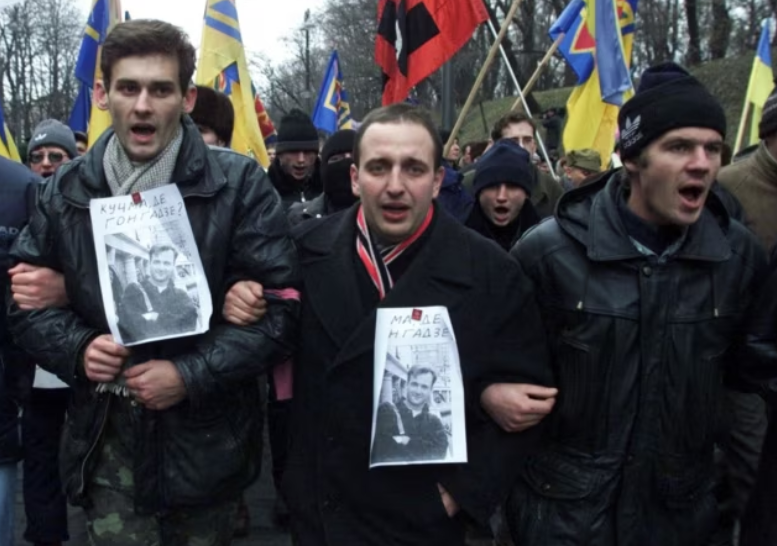
Public protests «Ukraine without Kuchma» with requirements to dismiss President Kuchma and investigate the killing of journalist Georgii Gongadze, December 2000. Photo: Radio Svoboda
What was going on in Ukraine at the beginning of 2001? Civic protests «Ukraine without Kuchma» were launched after leader of Socialist Party of Ukraine Olexandr Moroz published so-called «tapes of Melnychenko». They contained conversations of President of Ukraine Leonid Kuchma. Political opposition and civic activists perceived some of them as an evidence that Leonid Kuchma ordered the killing of Georgi Gongadze, journalist and founder of media «Ukrainska Pravda». Street fighting occurred on March 1, 2001, when policemen destroyed street camp of protesters. Some of them were arrested after protests on March 9, 2001.
«Tape scandal» caused the political crisis. Prime Minister Viktor Yuschenko was dismissed. International reputation of Leonid Kuchma was seriously damaged by allegations that he permitted the sale of Ukrainian radar systems «Kolchuga» to Iran. Those allegations have never been supported by any trustworthy evidence.
As an outcome, the Ukrainian authorities leaned towards Russia.
In 2001, Russian group of «luzhnikovskie» actively entered into Ukraine as the Ukrainian criminal investigation revealed in 2012. Babakov, Giner, Voevodin and their partner Maksim Kurochkin (nickname «Max Crazy») used the umbrella of Slovak state company which privatized electricity distribution companies in four Ukrainian oblasts. Later they plunged into business raids, regular conflicts and «peace talks» with Ukrainian oligarchs and participation in Ukrainian political life.
In several years, Kurochkin became the head of «Russian club», the headquarters of Russian political strategists and agents of Russian intelligence services. They were actively involved into Ukrainian presidential and parliamentary elections in 2004 and 2006, respectively. Kurochkin managed Ukrainian assets of «luzhnikovskie» and became a member of supervisory boards of their hotel complexes and enterprises.
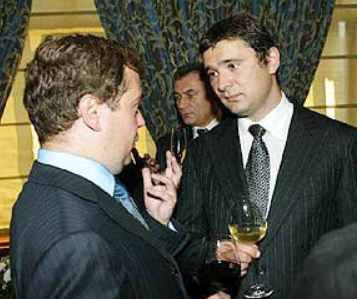
Dmitrii Medvedev, Head of the Administration of Russian President Putin (left) and Maksim Kurochkin, Executive Director «Russian club» at the opening of this club in Kyiv, September 2004. Photo: ng.ru
Russian criminal gang solved problems with acquisition of Ukrainian assets by criminal methods. They launched genuine war with Ukrainian oligarchic group «Privat» over the central market «Ozerka» in Dnipro.
Kurochkin pressured Mayor of Crimean city Simeiz Makarenko to make some favorable decisions, came to Mayor’s office with machine gun and fired. The Ukrainian Ministry of Internal Affairs reported that 346 hectares of Yalta natural reserve and three Crimean sanatoriums were illegally transferred into the ownership of fictitious companies of Moscow residents.
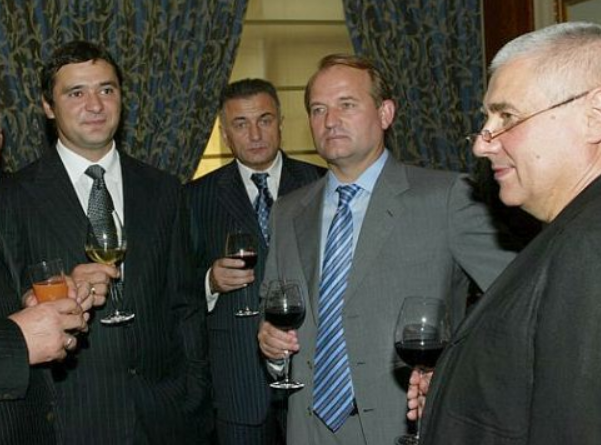
At the opening ceremony of «Russian club» in Kyiv in September 2004. From left to right, positions of that time: M.Kurochkin, the Executive Director of club, S.Gavrysh, the Vice Speaker of Verkhovna Rada of Ukraine, V.Medvedchuk, the Head of the Administration of Ukrainian President V.Yanukovych, G.Pavlovsky, Russian political strategist. Photo: social networks
In 2007, this Crimean scandal forced the Ukrainian law enforcement bodies to arrest Kurochkin and initiate criminal investigation.
Before the scandal, Kurochkin broke cooperation with Babakov, Giner and Voevodin. Later he was killed by killer in the courtyard of Svyatoshynsky district court in Kyiv…
However, all these events happened after the Ukrainian authorities transferred to «luzhnikovskie» gang Ukrainian objects of critical infrastructure and other valuable assets, and the gang prospered.
How Russian owners of VS Energy became «Slovaks» and «Dutch»?
Let us return in April 2001 when the State Property Fund of Ukraine, headed by Oleksandr Bondar, sold shares of oblast electricity distribution companies at privatization auction. As a result, shares of four companies – Zhytomyr, Kherson, Kirovograd and Sevastopol were bought by Slovak state enterprise Vychodoslovenske energeticke zavody, S.P. Kosice. Shares of two companies in Kyiv and Rivne oblasts – were bought by branch of American AES Corporation – AES Washington Holdings B.V. і .
In May 20001, Oleksandr Bondar and Director of Slovak company Josef Boinush signed respective agreements. Ukrainian public officials were joyful: large privatization was re-launched whereas Ukrainian state budget received 130 million USD from privatization. A few noticed that Mr Boinush said about consequent privatization of the company he headed – Vychodoslovenske energeticke zavody.
What happened next with Ukrainian assets privatized by Slovak state company? The court dispute between Zhytomyr electricity distribution company and Ukrainian tax service revealed that Slovak state company transferred its shares of Zhytomyr company to private VS Energy International N.V. in less than a year after their acquisition from the State Property Fund of Ukraine.
On March 14, 2002, the State Property Fund of Ukraine (indicated as creditor), Vychodoslovenske energeticke zavody, S.P. Kosice (initial debtor) and company VS Energy International N.V., Netherlands (new debtor) signed an agreement about transfer of indebtedness # 285. Shares of Zhytomyr company were transferred from Slovak state company to VS Energy International, indicated as the «daughter company of the initial debtor».
That is to say, Slovak state company did not pay the value of acquired Ukrainian assets within 5 days after privatization auction? The decision of the Ukrainian court aboutabove mentioned court dispute demonstrates – it did not! After transfer of indebtedness and ownership rights from Slovak company, VS Energy Inernational N.V. paid 190 000 000 UAH for shares of Zhytomyr company!
It seems that this scheme has been planned by Russians before the privatization auction. In 2022, project rupep.org published documents from the business register of Netherlands. According to them, the supervisory board of VS Energy International N.V. has included Alexander Babakov, director of Slovak state company Josef Boinush and attorney of «luzhnikovsky» Aleksandr Rene Garese from 2002 till 2005.
(By the way, if you a client of Ukrainian bakery «Volkonsky», be aware that you are the client of Babakov’s attorney! We will tell this story later).
Thus, the current ownership of VS Energy of Ukrainian electricity distribution companies looks like the scheme below:
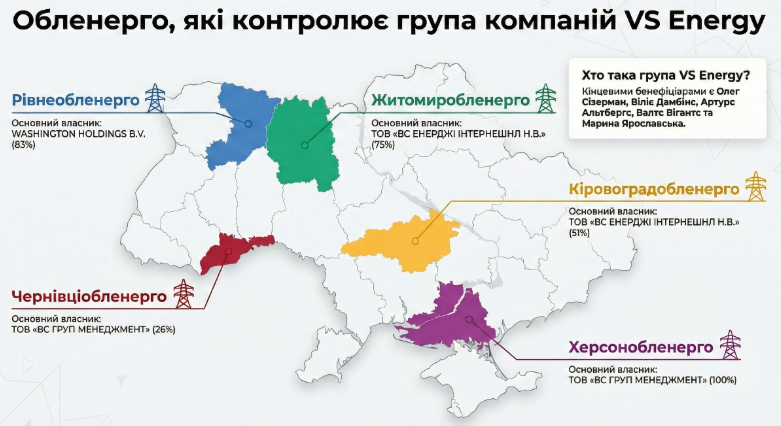
Infographics: the Center for Journalist Investigations
We did not include Sevastopol company because the service we use does not cover Ukrainian territories occupied by Russia.
We will focus on the activity of VS Energy in Crimea and Southern Ukraine, temporary occupied by Russia, in our next material.
Civil society organization «Information Press Center» expresses its gratitude for the financial support provided by the European Union through the project «Support for Frontline Media and Investigative Journalism,» implemented by Internews International. Information agency «The Center for Journalist Investigations» maintains full editorial independence, and the information provided does not necessarily reflect the views of the European Union or Internews International.