

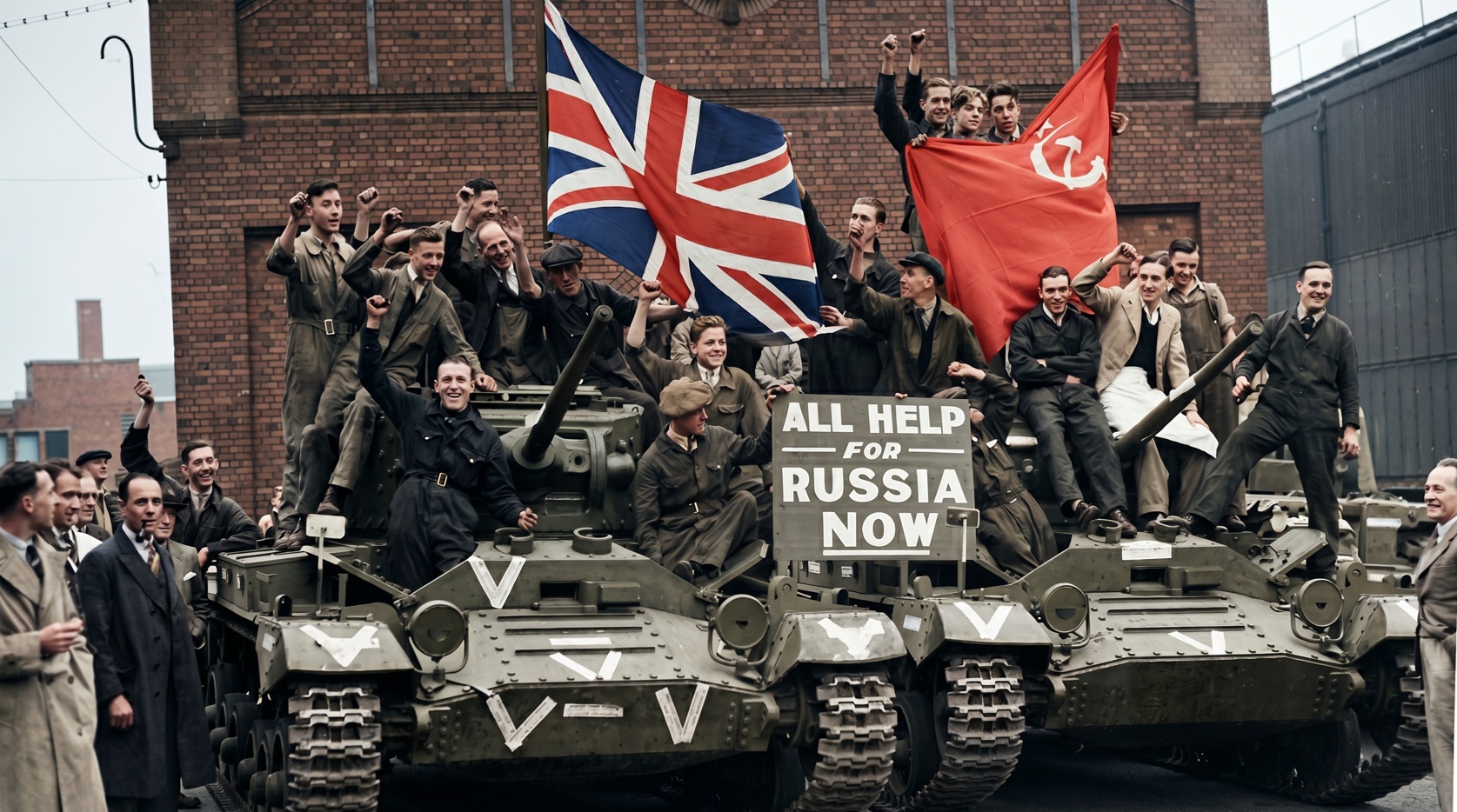
We debunk one of the most persistent myths of Russian disinformation about Lend-Lease. During the Second World War, the Soviet Union received massive supplies of aircraft, tanks, lorries, fuel, food, medicines, machine tools, metals and technology from the United States, the United Kingdom and Canada.
But Russian propaganda prefers not to mention it. Because it completely shatters the Kremlin’s myth of a ‘self-sufficient empire’ that supposedly bore the burden of the war all on its own.
That is precisely why Moscow is reacting so nervously today to the aid being provided to Ukraine by its partners. The historical parallel is too obvious. The Kremlin understands perfectly well that an international coalition poses a fatal threat to any empire that launches a war of aggression.
Do you know which aircraft Oleksandr Pokryshkin used to score most of his aerial victories? And which fighter jet did Crimean Tatar Amet-Khan Sultan fly while fighting for Donbas and Crimea? And which vehicles did the Red Army use to transport artillery, shells, infantry and «Katyusha» rocket launchers?
Today Moscow says: «We won the Second World War»! Russian historical mathematics: to take something that belongs to someone else and then claim they did it all themselves.
On 22 June 1941, Germany attacked the Soviet Union. Within a few months, the Red Army had lost hundreds of thousands of soldiers, a vast amount of equipment and control over vast territories.
The Germans were advancing rapidly towards Moscow. The USSR was losing its industry, fuel supplies, manpower and transport infrastructure. The Soviet economy simply could not keep up with the scale of the disaster. Moscow began to seek help from the West.
In his personal letter to Winston Churchill, Prime Minister of the United Kingdom, Soviet Premier Joseph Stalin said:
«I believe there is only one way out of this situation: to open a second front this year, somewhere in the Balkans or in France, which could draw 30–40 German divisions away from the Eastern Front and, at the same time, provide the Soviet Union with 30,000 tonnes of aluminium by early October this year and a minimum monthly supply of 400 aircraft and 500 light or medium tanks. Without these two forms of aid, the Soviet Union will either suffer defeat or be weakened to such an extent that it will lose, for a long time, the ability to provide assistance to its allies.»
Stalin told about Lend-Lease, program of military and economic aid launched by the United States for allies in the war against Nazi Germany.
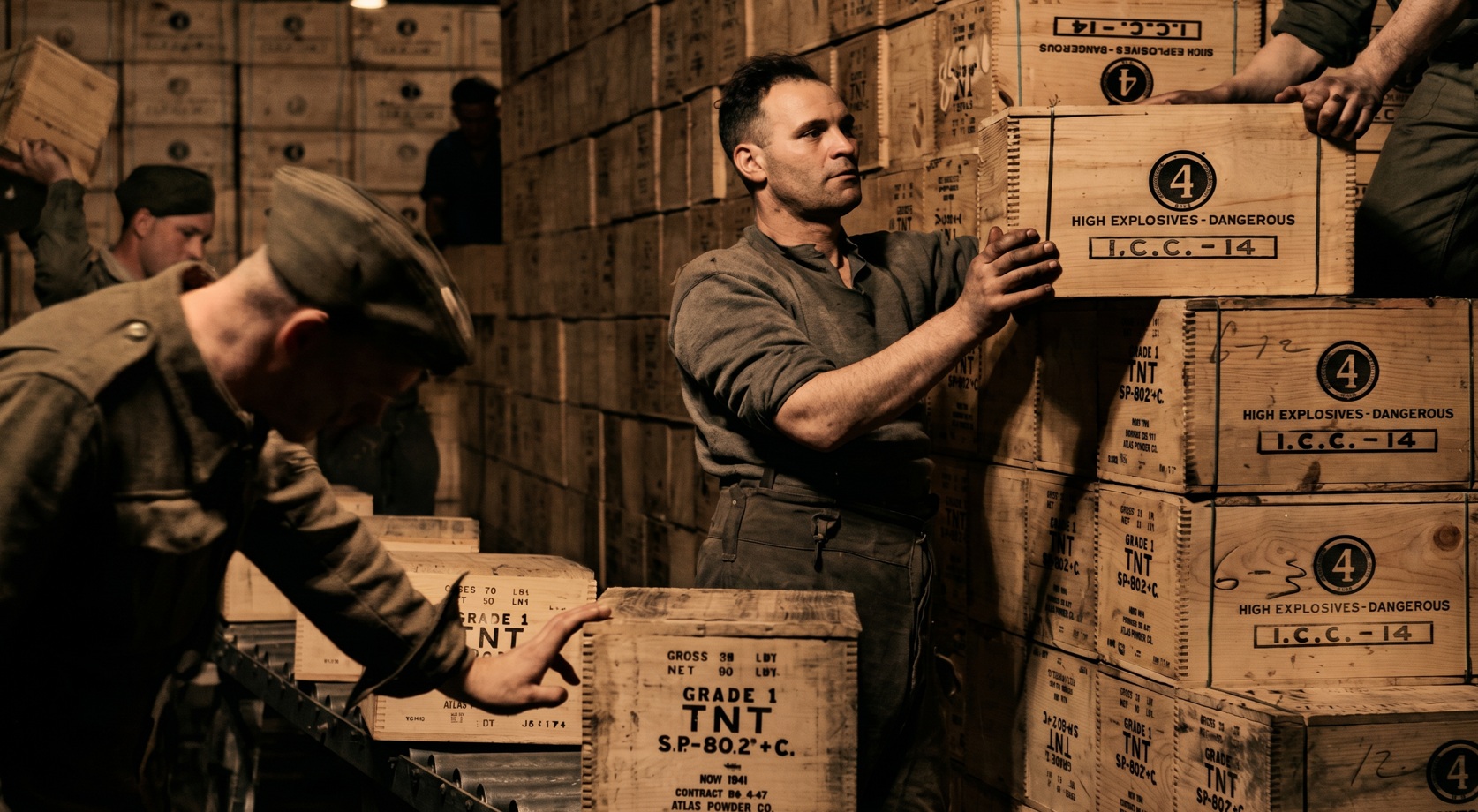
Вибухівка американської компанії Atlas Powder Company для СРСР за програмою ленд-ліз під час Другої світової війни. Архівне фото Granger / TASS, колорізоване із застосуванням ШІ.
Within this program, the United States transferred weapons, machines, raw materials, fuel, food and industrial materials to countries of anti-Hitler coalition without immediate payment.
USA approved the Lend-Lease Act in March 1941, nine months before American entry into the war. Its main idea has been pragmatic. The United States provide assistance to countries in war with Nazi Germany, in order not to let Hitler on their own continent. At the beginning, the program covered the United Kingdom and China.
Within Lend-Lease, USSR received almost 23 thousand airplanes, over 12 000 tanks, approximately 400 thousand lorries and jeeps, 8 thousand tractors, over 13 thousand motorcycles, almost 2 thousand locomotives and over 11 thousand rail carriages.
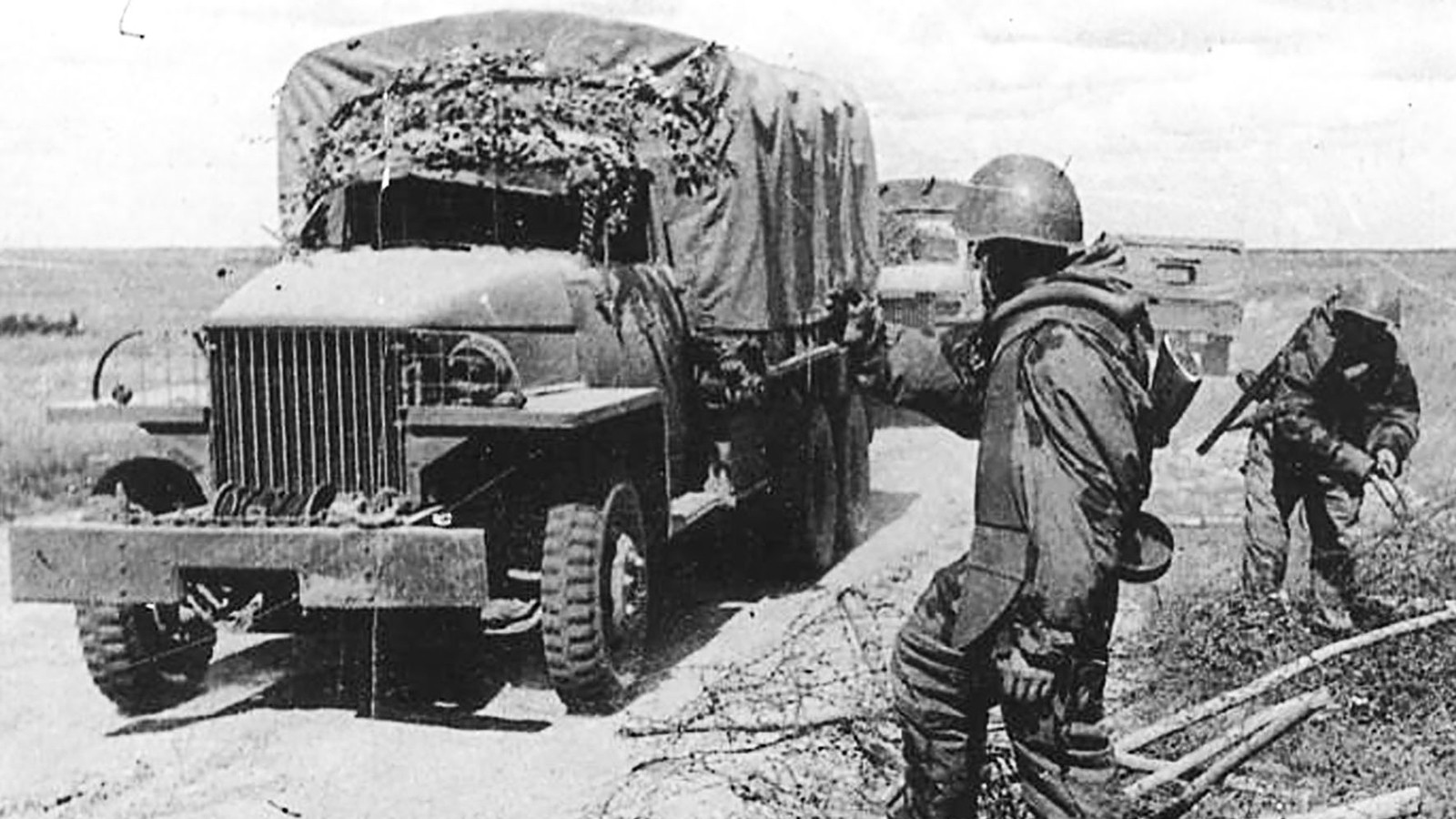
Американські вантажівки Studebaker US6 у Червоній Армії під час Другої світової війни. Архівне фото з сайту kolesa.ru
American «Studebakers» (Studebaker US6) became the basis of the mobility of the Red Army. They carried Soviet rocket launchers «Katyusha», artillery, canons and infantry. That is to say, symbol of Soviet military might literally used American wheels.
USA supplied the Soviet Union over 2,5 million tons of oil products, almost 4,5 million tons of food, hundreds of thousand tons of aluminium, copper and explosives. One in three shells used by the Red Army was made from American components. One in two military vehicles was American or Canadian.
According to Soviet veteran Lieutenant P.Demchenko:
«It is the airplane used by pilots of my regiment since 1943. We received tem from America. Americans gave us everything: egg powder, tinned pork. Our army was half-starved. They gave us everything – from food to clothing. Our summer uniforms were American. Wonderful, warm overalls. The aircraft instruments and equipment were American. The weapons were too…»
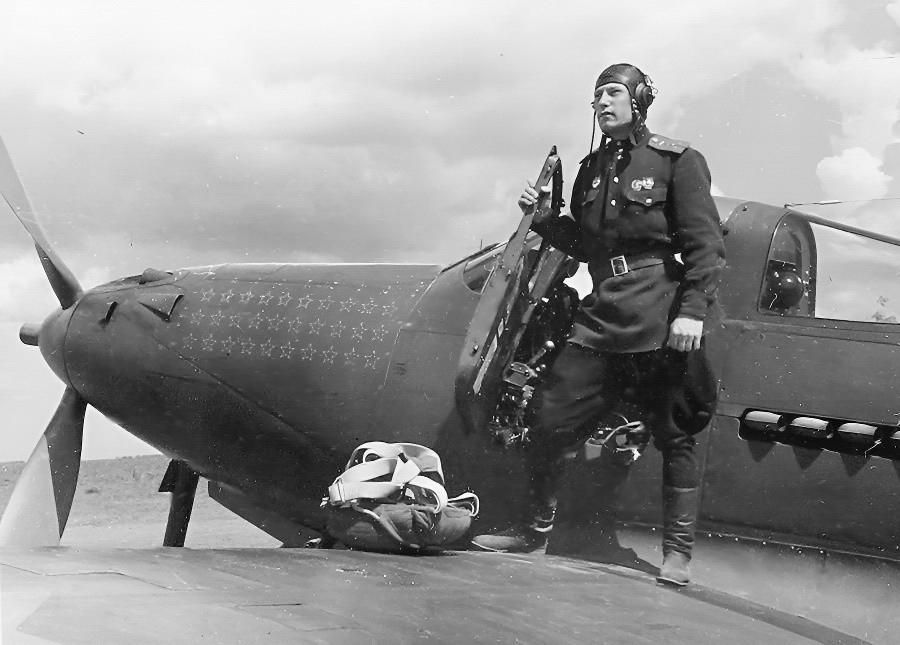
Тричі Герой Радянського Союзу Олександр Покришкін та його американський винищувач Bell P-39 Airacobra, 1943 рік. Фото: soviet-aces-1936-53.ru
One of the most famous aircraft flown by Soviet aces was the American «Aerocobra» fighter (Bell P-39 Airacobra). It was in this aircraft that Alexandr Pokryshkin, a three-time Hero of the Soviet Union, flew and scored most of his aerial victories. Two-time Heroes of the Soviet Union, Grigory Rechkalov and Alexander Klubov, also fought in «Aerocobras». The Crimean Tatar Sultan Amet-Khan, one of the most successful Soviet pilots, also fought in the American «Aerocobra». It was in this fighter that he took part in the battles for Donbas and Crimea.
Thus, the Soviet heroes of whom the Kremlin is so fond of boasting today fought using American and British equipment.
As P. Demchenko, the same Soviet veteran of the Second World War, recalls, «The Americans brought their assembly lines here, where the vehicles were assembled. Our officers were constantly there, inspecting these vehicles and handing them over to us. We would then check them ourselves and sometimes find minor defects. And I must say that when we reported these defects to the American officer on duty, they would either replace the vehicle without question or send a team to repair it if the damage was minor».
But Russian propaganda prefers not to mention it, because then it would have to explain why a self-sufficient empire was unable to conduct war without Western engines, machinery, aviation fuel and steel.
It is important to note that Lend-Lease was not just about ready-made tanks and aircraft. It is also about the fact that, without Western supplies, the Soviet Union would not have been able to produce its own equipment on the necessary scale. The Allies supplied the USSR with machine tools for machining tank turrets, electric furnaces, electric motors, cutting tools, oil equipment and mobile power stations.
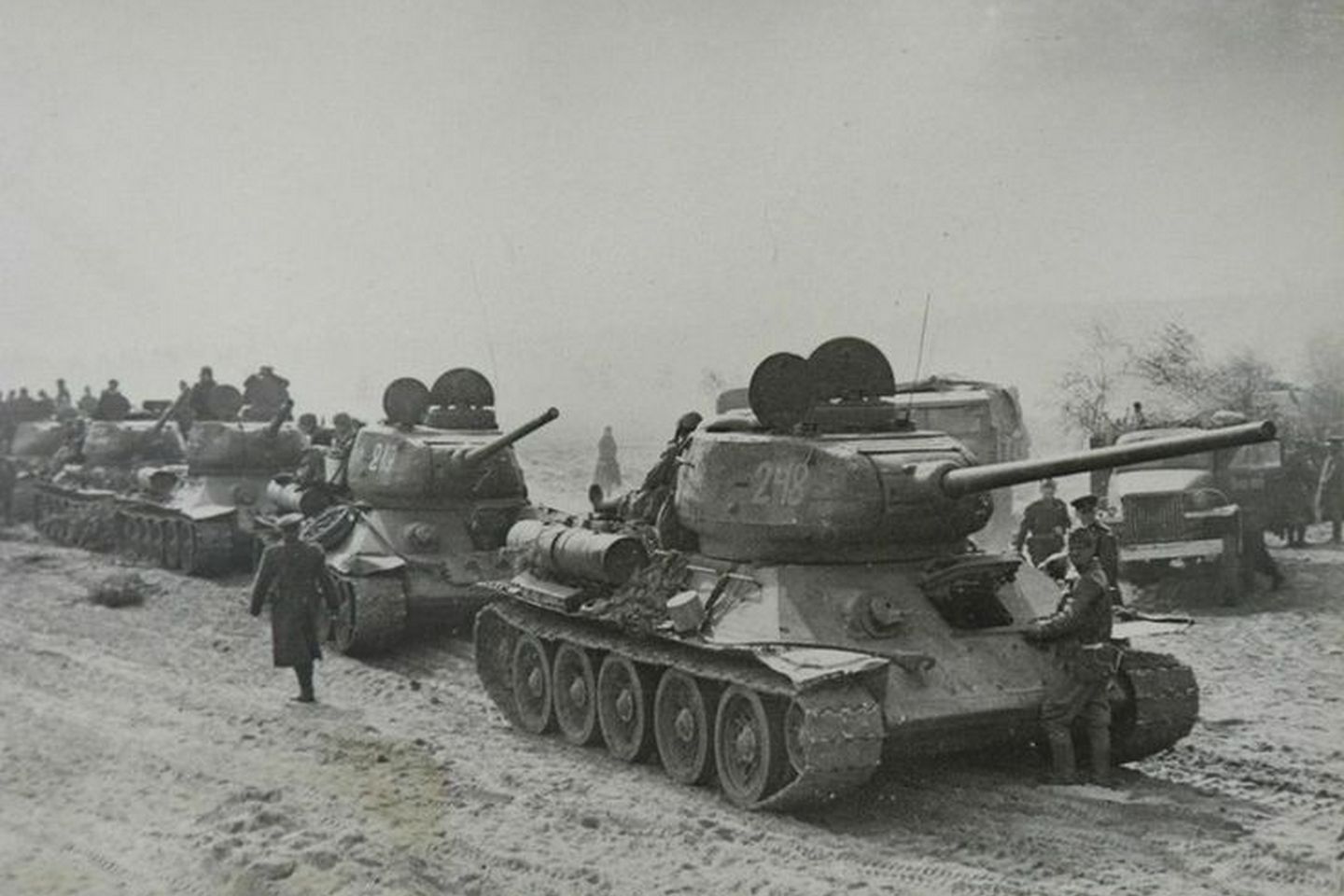
Танки Т-34-85 Червоної Армії, 1944 рік. Фото: waralbum.ru
Let us look at legendary Soviet tank T-34-85, presented by Russian propaganda as the main symbol of Soviet victory. At the beginning of 1944, the largest Soviet manufacturer did not have equipment to process new tank towers. The required vertical lathes had to be ordered urgently from British and American companies.
It means that over 10 thousand T-34-85 were manufactured solely due to Lend-Lease.
The United States also supplied the Soviet Union with nearly 14,000 tonnes of nickel, a key alloying metal for armour steel. A further 13,000 tonnes came from the United Kingdom.
Along with military equipment for the front, thousands of tons of medicines, medical equipment and first-aid supplies were sent to the USSR to treat the wounded. The Americans supplied the Soviet Union with millions of doses of penicillin, sulphanilamides, dressing materials, field hospitals, X-ray equipment and surgical instruments. It was American penicillin that became one of the factors behind the sharp decline in mortality from blood poisoning and gangrene in Soviet hospitals towards the end of the war. Prior to Lend-Lease, the USSR had virtually no mass production of antibiotics. Soviet medicine lagged catastrophically behind its Western counterpart.
After the end of the Second World War, the Soviet leadership, despite its national tendency towards wholesale deception, acknowledged the importance and contribution of Lend-Lease to the victory. It downplayed it to some extent, of course, but it did acknowledge it.
Interpretation of current Russian authorities is close to absurd.
This is what Dmitrii Peskov, press secretary of V.Putin, said:
«Today American manuals write that USA played decisive role in the defeat of Nazism. It is possible to say that we would not succeed without Lend-Lease? It is impossible. We would succeed and win».
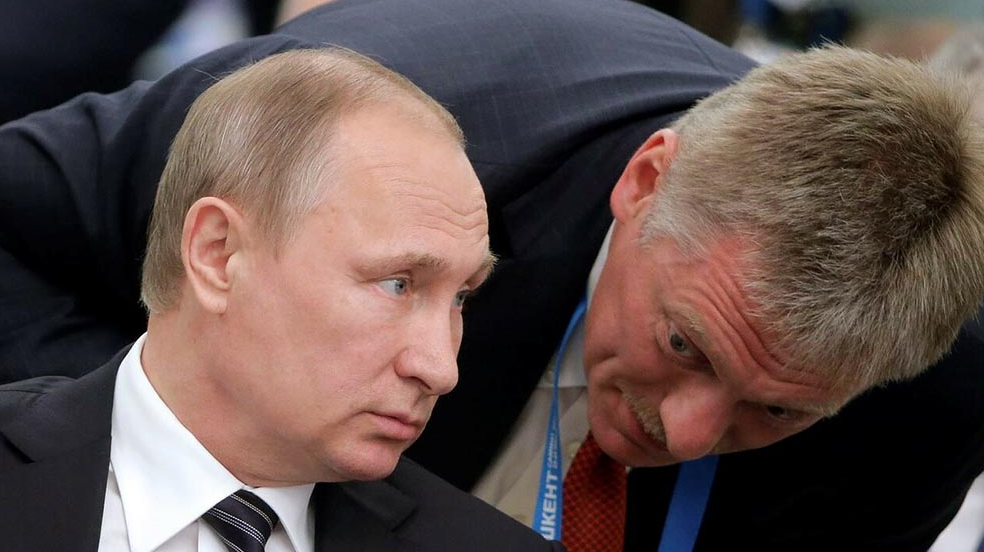
Глава Кремля Владімір Путін та його речник Дмітрій Пєсков. Фото: ТАСС
Today, Ukraine receives air defence systems, long-range missiles, armoured vehicles, ammunition and financial aid from its allies to support the economy. And this is precisely what infuriates the Kremlin. During the Second World War, the democratic world helped the USSR to stop Nazism. Today, it helps Ukraine to stop a new form of Russian fascism. And the Kremlin understands perfectly well that an international coalition is a fatal threat to any empire that launches a war of aggression. That is why Russian propaganda is doing its utmost to ridicule Western aid to Ukraine.
According to Russian propagandist, «aluminium armour can’t even withstand large-calibre small arms fire, yet it is precisely for the planned counter-offensive that the US has supplied Ukraine with several hundred of these armoured personnel carriers. How many Ukrainian soldiers will die in the process is, of course, of no concern to the Americans. It is far more important to get rid of the junk under Lend-Lease. After all, the M-113 is not only the most common but also the oldest armoured personnel carrier in the world».

Бронетранспортер М113 Збройних сил України. Фото: facebook.com/AFUkraine
A particular favorite tactic of Russian propaganda is the claim that Lend-Lease was supposedly a debt bondage from which Russia took 60 years to free itself. This is precisely what Ukrainians are being scared with today when it comes to modern Western aid to Ukraine. The argument goes that the Americans do not give anything to anyone for free, and that Ukraine will be indebted to Washington for centuries to come.
According to Russian propagandist, «because of this Lend-Lease scheme, Ukraine risks becoming a colony for many years to come. If it remains under America’s so-called protection, it will be paying for it forever. Neither Zelenskyy nor Azov nor the special operation will remain, but the debt will».
Lend-Lease has not been Christmas present. However, under the program, anything destroyed during the war was written off. Tanks, airplanes, lorries and ammunition that were burnt at the front or lost in battle were not compensated for in any way. Only property that remained serviceable after the end of the war was subject to payment. After the Second World War, the Soviet Union decided to keep quite a lot for itself: primarily ships, industrial equipment and machinery. Initially, the US presented the USSR with a bill of approximately $2.6 billion. Moscow refused to pay, then haggled for years, secured discounts, dragged out negotiations and even severed contact altogether against the backdrop of the Cold War. As a result, the sum was reduced several times to $722 million. And even this money was paid by the Soviet Union and later Russia not because the Americans had forced them into servitude, but because they themselves had agreed to keep some of the machinery and equipment. Russia made the final payments only in 2006, due to constant delays, political conflicts and a simple unwillingness to meet its own financial obligations.
So, Russia is very proud to appropriate other people’s victories, other people’s territories, other people’s factories, other people’s history and other people’s aid, without which it would not be able to survive.
This does not detract from the heroism of those who fought against Nazism, but it completely debunks the Kremlin’s myth of a «self-sufficient empire» that supposedly bore the burden of the war all on its own.
That is precisely why Moscow is reacting so nervously to the aid being provided to Ukraine today, because the historical parallel is all too clear. Weapons and resources of international coalition can stop aggressive empires. In the 1940s, the world understood it. Today, it is facing this test once again.
And we will continue to debunk Russian myths using documents, figures and facts.