
ENG


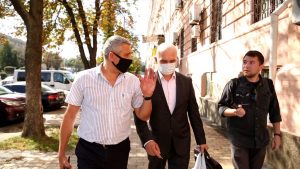
Former Crimean judge Valerii Chornobuk, accused of the state treason, managed to be mobilized into the Armed Forces of Ukraine in Dnipro. He used mobilization to stop court consideration of his case in Kyiv.
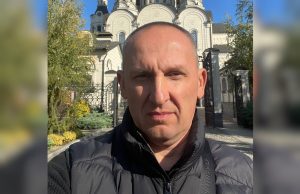
The Center for Journalist Investigations has recently reported about current activity of Anton Shevtsov, separatist from Sevastopol, former head of police in Vinnytsia region, who was dismissed under the pressure of civic activists from Automaidan and Ukrainian veterans, detained but then released. Seven years passed, and the State Security Service of Ukraine (SBU) served him a suspicion of state treason.
After the Russian invasion, Shevtsov fled to Crimea and launched his telegram channel. The channel posts videos of Ukrainian prisoners of war kept in prisons around Russia as well as on occupied territories of Ukraine. Shevtsov pretends his posts help to release them and bring back to Ukraine.
Does Anton Shevtsov have an influence on forming lists of Ukrainian PoWs for exchange? Or is his activity a project of Russian intelligence shaping minds of relatives of Ukrainian PoWs?
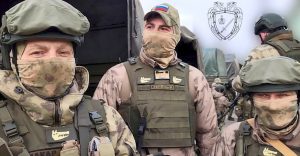
Assault reconnaissance unit «Convoy» of so-called «Aksyonov people» is part of «Livadia» battalion, the second battalion created by «Head of Crimea» Sergei Aksyonov. The first battalion is called «Cossack assault battalion «Tavrida» headed by traitor Anton Syrotkin, Aksyonov’s friend and the chief of «Black Sea Cossack Troops». Commander of «Livadia» is unknown. However, video of Russian propagandists demonstrates mercenary Konstantin Pikalov (call sign «Mazai») as commander of «Convoy». He is very close to Yevhenii Prigozhin, the owner of private military company «Wagner».
How these units are legally registered? Do they fight at the frontline? What status do their soldiers have? Is it true that we are talking about PMC of Aksyonov, created under the example of PMC «Wagner»?
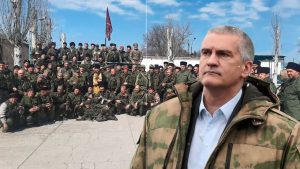
Crimean propagandists glorify not only mercenaries of Prigozhin, Putin’s favorite, but also mercenaries of «Crimean governor» Sergey Aksyonov. He has his own private military company, too. How Aksyonov makes friends with Prigozhin and develops his own mercenary troops?
The Ministry of Infrastructure of Ukraine ordered the closure of sea ports «Berdyansk», «Mariupol», «Skadovsk» and «Kherson» on April 30, 2022. Ports will stay closed until their liberation from Russian occupation.
At the same time, Russian occupants use infrastructure of occupied ports to steal grain and metal from occupied territory of the Ukrainian South. Their assistants are Ukrainian traitors who agreed to re-launch the work of ports after military fighting was over.
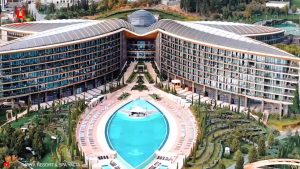
This story is truly special because this hotel complex, popular among the Russian rich, officials, businessmen, and the company Garant-SV LLC that owns the hotel, as well as their ultimate owner, Sberbank of Russia, are under Western and Ukrainian sanctions.
In their investigative article on the matter, the Ukrainian media project Center for Journalistic Investigations (CJI) investigated how this sanctioned hotel takes part in a global, albeit commercial, tourist competition, and how the British organizer of the award violates the sanctions.
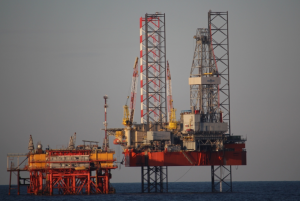
Marine Traffic, the popular online service to track ship traffic, indicates in its database that the State Unitary Enterprise «Chernomorneftegaz» illegally created by Russia owns ships of the «Chornomornaftogaz» fleet stolen from Ukraine. It also gives their illegally changed names and the flag. This data fully contradicts the register of the International Maritime Organization (IMO) in which Ukraine is indicated as the owner of ships.
The Center for Journalist Investigations addressed the owner of Marine Traffic. The company promptly corrected part of the information. Thus, we created a precedent when false information about the ownership of Ukrainian assets stolen by Russia was changed at this useful web resource. However, we made only the first step – a lot of work is ahead.
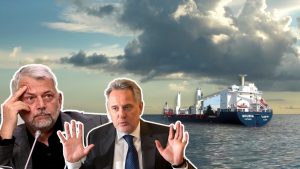
For the production of titanium dioxide, the plant of Ukrainian oligarch Dmytro Firtash located on the territory of occupied Crimea needs ilmenite. It is extracted in Zhytomyr oblast and supplied by various ways to the peninsula. In order to avoid Crimean sanctions, the so-called “ilmenite scheme” is used: each element of the scheme is legitimate but the overall result violates sanction restrictions and the Ukrainian legislation. Intermediary companies buy ilmenite ore concentrate from the state enterprise “United Mining and Chemical Company ” (UMCC), sell it to another company, which supplies the concentrate to Crimea. Supply routes and companies can change but the Ukrainian raw material is still supplied to the Crimean titanium factory owned by Mr. Firtash. Czech company “Belanto Trade” has been among buyers of the ore concentrate from the UMCC in November 2020. It insists that its contractors do not supply ilmenite to Crimea. However, it does not disclose their names and the final recipient of the resold Ukrainian titanium ore.
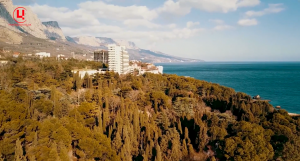
Senior public officials of Russian Tatarstan and related business colonized Crimean Foros. Corrupted clans of «Kazan people» buy lands and destroy the famous park-monument by their buildings. Families of Shaimiev, ex-President of the Republic of Tatarstan, Ravil Muratov, ex-Vice-Prime-Minister and Advisor of the current President of Tatarstan, Asgat Safarov, ex-Minister of Internal Affairs and the head of the Office of the President of Tatarstan and other public officials have luxury dachas in Foros.
The connection with JSC «Tatneft» can be found in the privatization of «Foros» sanatorium stolen from Ukraine as well as in the illegal construction on its territory. Though, «Tatneft» stubbornly denies any relations with these illegal operations as it is afraid of possible Western sanctions.
The Center for Journalist Investigations uncovered connections between Foros land buyers and developers and «Tatneft» company. We tell the story of how Ukrainian corruption laid the ground for the Russian corruption brought in to Crimea by the occupation army. Today Russian corrupted clans implement the colonization policy on the occupied territory.