


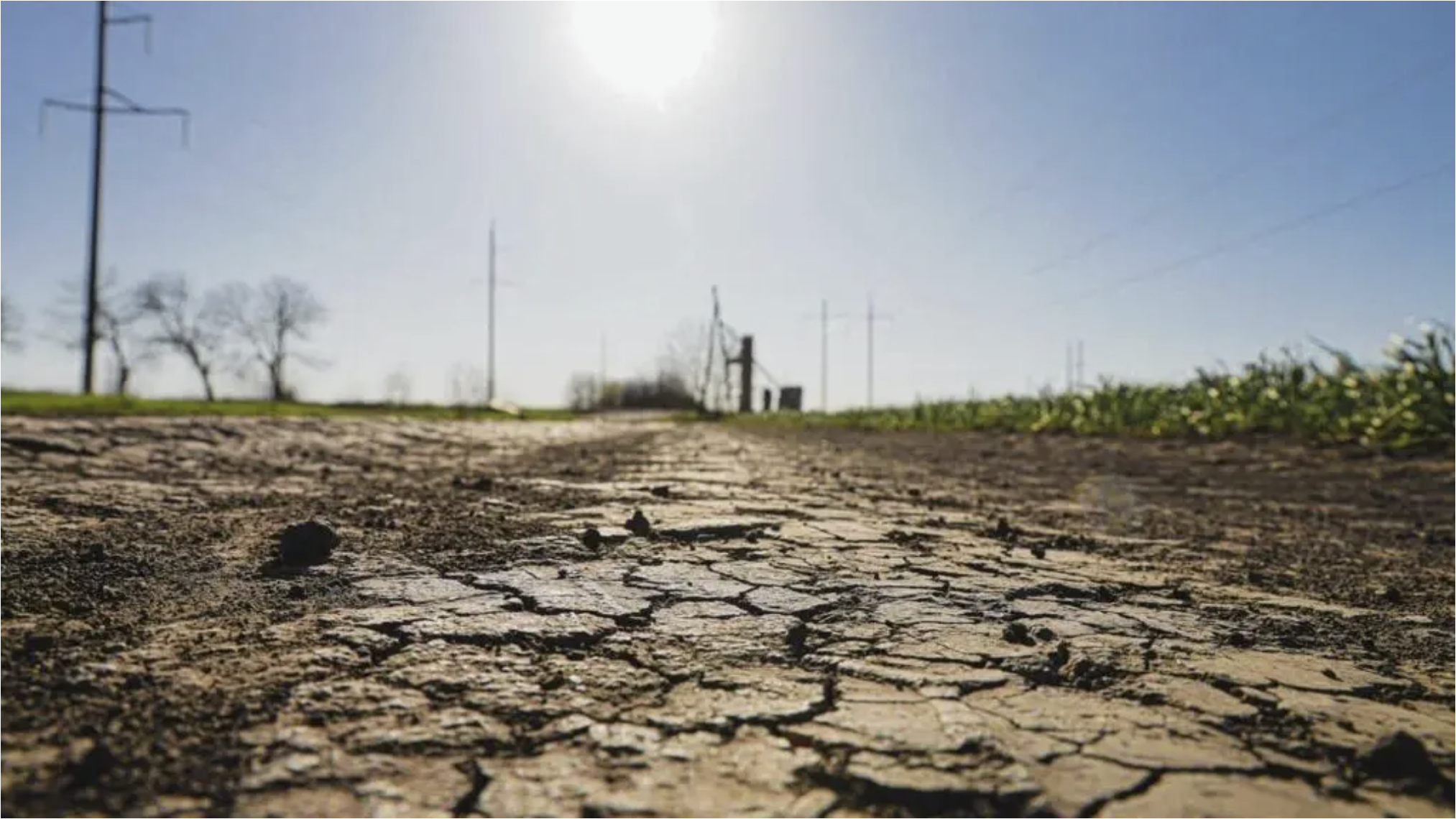
There is no water. Water canals are empty. Everybody forgot about irrigation of once fertile fields. Water supply does not work because there is no electricity. Wells are depleting the last source of moisture – groundwater.
Southern Ukraine occupied by Russia is suffering from a humanitarian water crisis. Russia is physically incapable of supplying water to the population and the agricultural sector on the territory it occupies.
Where has the water in occupied Kherson and Zaporizhzhia regions gone, and what is the situation with the water supply in occupied Crimea?
How did it happen?
First, let us recall the chronology of lasting war crime of Russia and its political and military leadership.
Russians occupied the Left Bank of Kherson oblast and southern part of Zaporizhzhia oblast in February-March 2022.
On February 26, military engineers and sappers of the Russian Black Sea Fleet, posing before cameras of Russian propagandists, exploded temporarily dam, built on North Crimean water Canal by Kherson farmers in 2014. Then, they destroyed a wall on capital dam near administrative border with Crimea. Next day, on the 27th of February, Russian occupants exploded water gates of the main building of North Crimean Canal in Tavriisk, though, they could easily open them.
In November 2022, under successful Ukrainian counter-offensive on the Right Bank of Kherson oblast, Russians exploded pump station of Kakhovka main canal. It supplied drinking and irrigation water from Dnipro River to occupied southern part of Kherson and Zaporizhzhia oblasts.
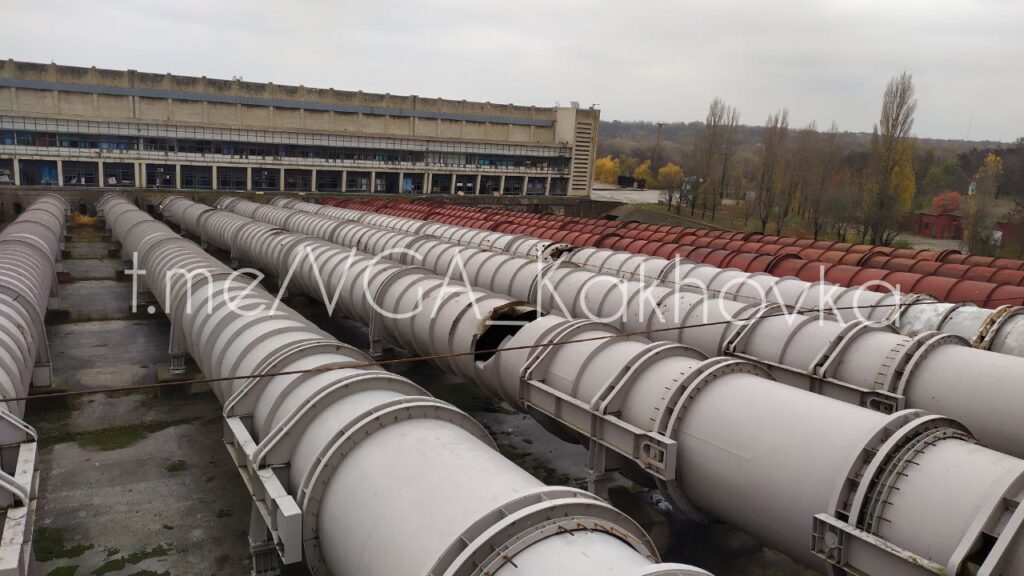
Kakhovka main canal damaged by Russian shelling, 18.11.2022. Source: Russian occupation media
In June 2023, Russian troops committed new war crime. They exploded the dam of Kakhovka Hydro Power Station. The huge flood covered settlements on both sides of Dnipro River. Dozens of people died whereas thousands lost their houses.
Since then, the renewal of water supply by both canals is technically impossible. Territories along former Kakhovka Water Reservoir suffer from dehydration.
Article 55 of the Fourth Geneva Convention relative to the Protection of Civilian Persons in Time of War obliges occupants to provide population on occupied territories with drinking water. Where to get water? It is the problem of occupants. Article 54 of the First additional protocol to the Convention directly forbids attacks on irrigation constructions and systems of water supply. Russians violated rudely both articles and they keep violating them.
Dehydration of southern Steppe
Problems with water supply in occupied Kherson oblast have worsened during the fifth year of the Russian occupation. Ground water disappears in Lyubymivka where the main pump station of Kakhovka main canal is located. The level of ground water fell down to 20 meters. The only water well is not capable to cover all needs of local community whereas Russian occupants do not support its work and repairing.
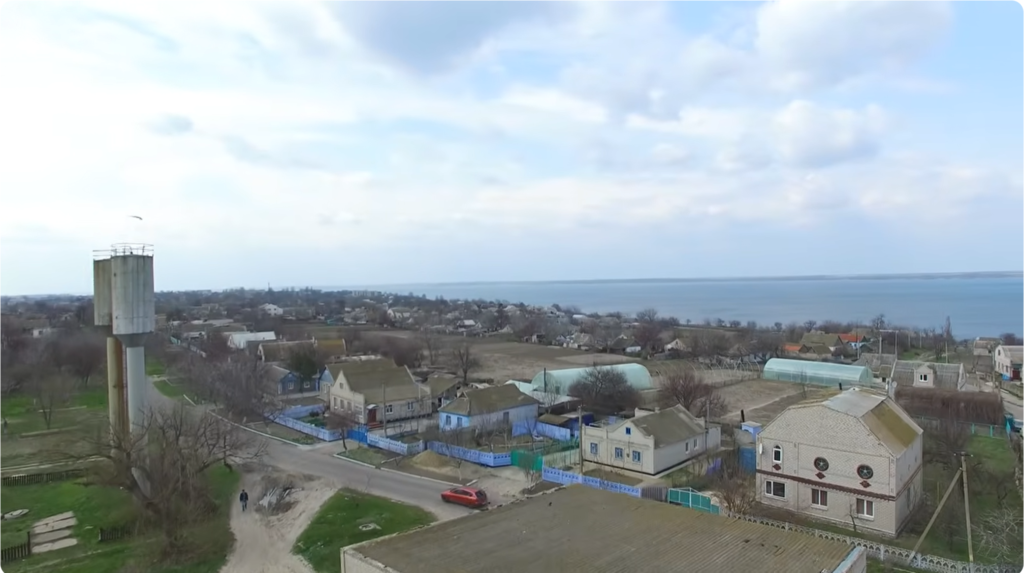
Lyubymivka, water towers. Source: Youtube @МояЛюбимівка
In Nyzhnesirogiska community of Genichesk raion, water is supplied once per 3-4 days when Russian occupants bring generators. Peasants are obliged to collect water from water towers or rain water during other days.
However, Russian occupation administration, headed by “Russian Kherson governor” Volodymyr Saldo, has kept persuading inhabitants that it cared about their needs and supplied water.
Ivanivka community lost access to the water completely because it fully depends on Kakhovka main canal. Inhabitants drill water wells en masse. It means that the level of ground water will fall.
Occupied Zaporizhzhia oblast also suffers. Berdyansk does not have access to drinking water. Before the Russian occupation, needs of city inhabitants were covered by already mentioned Kakhovka main canal.
Russian occupants involve youngsters from propagandist youth organization “Young Army” [Yunarmia] to make videos about delivery of plastic water bottles to people with low mobility. In Tokmak, another city in occupied Zaporizhzhia oblast, residents of multi-story buildings get water from private wells, if they have electricity generator.
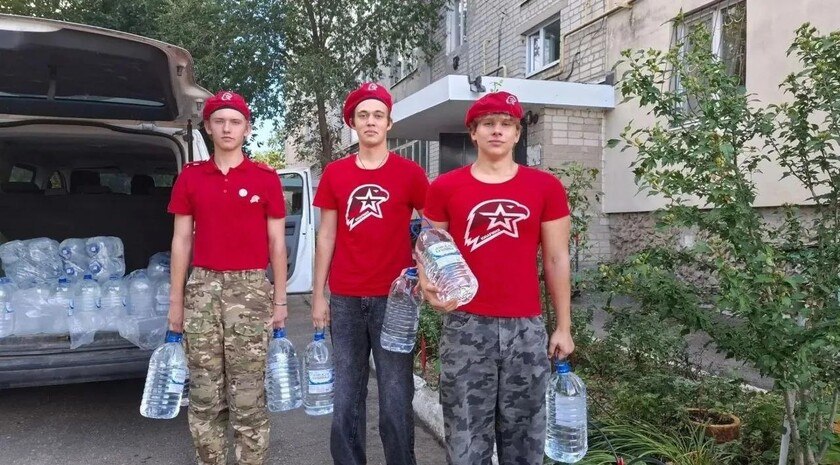
Young members of “Young Army” are used by Russian propaganda during water crisis in Berdyansk. Source: Russian occupation media
In Melitopol, the water is supplied according to the schedule which does not coincide with the schedule of electricity supply. As an outcome, it is difficult to get water even when it is supplied. Water is sometimes supplied by water tanks and Melitopol residents wait for it in long queues.
Widespread well-drilling is taking place in villages. In the short term, this will also lead to a drop in the level of ground water and the salinisation of fertile land in occupied Southern Ukraine. People are fleeing these areas because of the Russian occupation and its economic, social and infrastructural consequences. And if these lands suffer an environmental disaster due to dehydration, people will have nowhere to return.
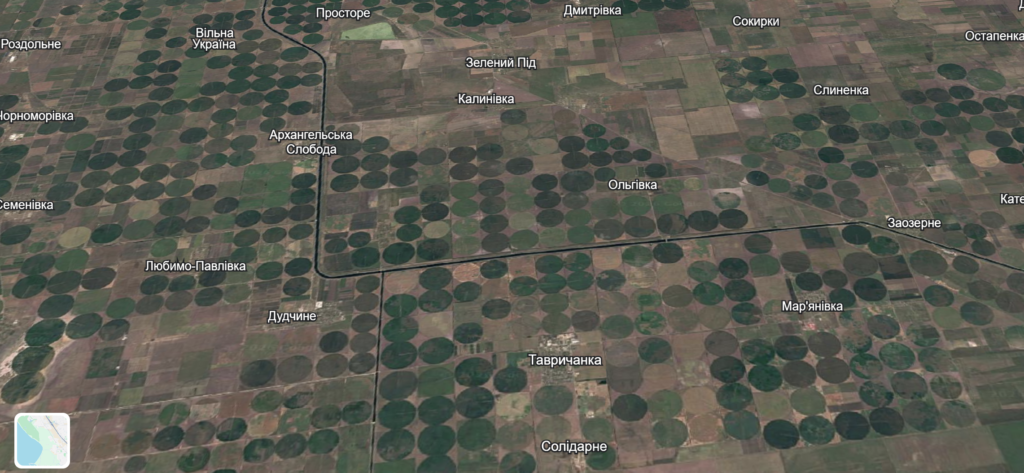
Kherson oblast, 2016. Photo – Google Earth
Before Russian occupation, green circles and rectangles of irrigated lands of southern parts of Kherson and Zaporizhzhia oblasts have been easily recognized on numerous satellite images. Now agriculture is becoming far more risky there. The longer Russian occupation is, the less chances for recovery are.
Crimea without water
The situation in occupied Crimea is also grim. Following the complete destruction of the North Crimean Canal, people also switched to drilling wells there. However, ground water cannot meet all the needs of the peninsula’s agriculture, which has traditionally relied on water from Dnipro River. Virtually the whole of northern Crimea has been left without irrigation, and so the attempt to resume rice cultivation following the seizure of the main structure of the North Crimean Canal in 2022 ‘fell through’ as early as the following year after the Kakhovka hydroelectric power station dam was blown up. Now it is over for good. Vegetable fields in central Crimea, as well as orchards and vineyards in the foothills, are irrigated by groundwater.
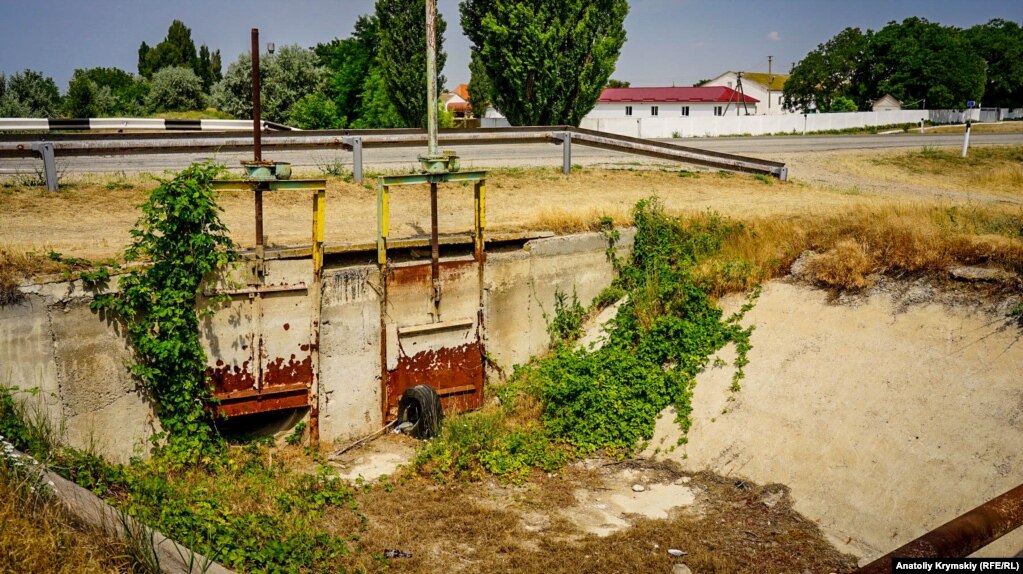
Dry tubes of rice canal near Ishun village, occupied Crimea. Photo: Anatoliy Krymskiy (RFE/RL)
Under independent Ukraine, over 120 000 hectares were irrigated in Crime. Now this figure is little bit more than 20 000 hectares. It is 15-17% of the irrigated area before Russian occupation.
Occupied Sevastopol draws its water from the Chornorichensky Reservoir, and this water is supplied to residents by the Russian state-owned unitary enterprise ‘Sevastopolvodokanal’. Back in March 2022, Russian occupation administration of Sevastopol reported that a fifth of the city’s water supply networks were in a state of disrepair or had become worn out. Several incidents occur every day, resulting in the water supply being cut off to entire neighbourhoods. The situation has not improved over the past four years. The Sevastopol water supply system comprises 1,231 km of water mains. Consequently, over 200 km require repair or replacement. However, there are only enough resources to patch up the leaks. As a result, this year pipes are being replaced at three locations, totaling just 2 km in length.
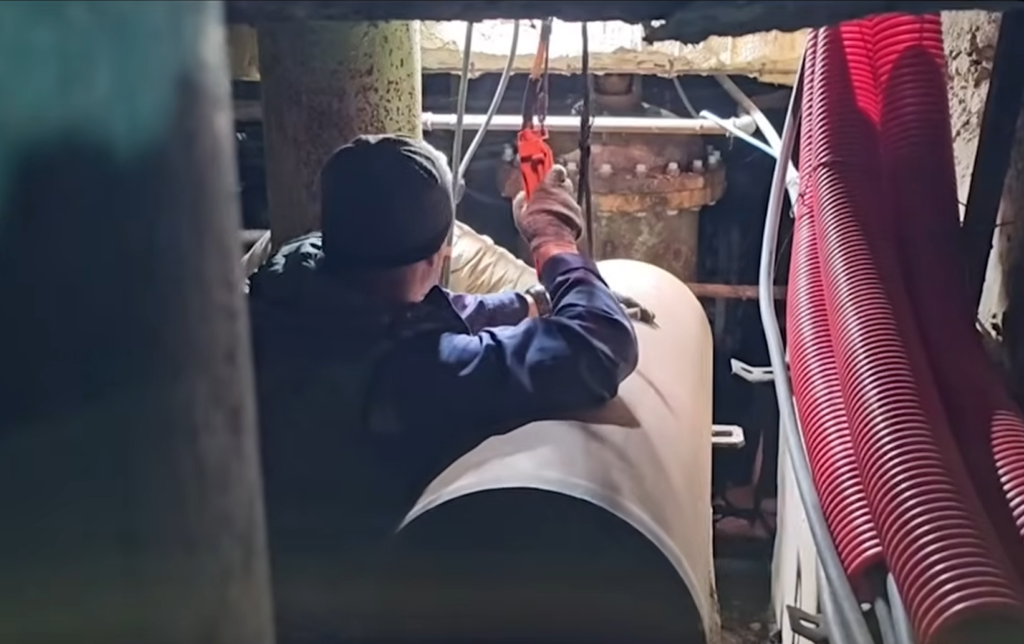
Repairing of water supply in occupied Sevastopol. Source: Youtube @stv92ru
Recent Ukrainian attacks on the Crimean energy infrastructure have led to a severe electricity shortage. And when parts of Sevastopol are without power – which happens regularly – the water supply is significantly reduced or cut off altogether. Clearly, were it not for the water consumption by the Russian occupiers, the water from the Chornorichenske Reservoir would be quite sufficient to meet the needs of Sevastopol population. And if the money spent on the war were channeled into repairing the damaged water mains, there would be far fewer incidents across the city.
But as long as Sevastopol, Crimea, Kherson and Zaporizhzhia oblasts remain under the control of the Russian troops, it is pointless to hope for an improvement…